Part 3 of the 4-part series What Happens Behind Your Window Blinds: The Complete Series.
In the last part of this series, we looked at how heat builds up in the gap behind closed coverings and why some summer summer blind habits can stress certain glass. Now the season turns, and cooler Mesa mornings bring something new into that same gap: moisture.
This series was shaped with insights from Rapid Blinds, whose work with window coverings across the Valley helped explain how slats, airflow, and glass behave together.
Why Fog Shows Up When the Louvers Are Shut
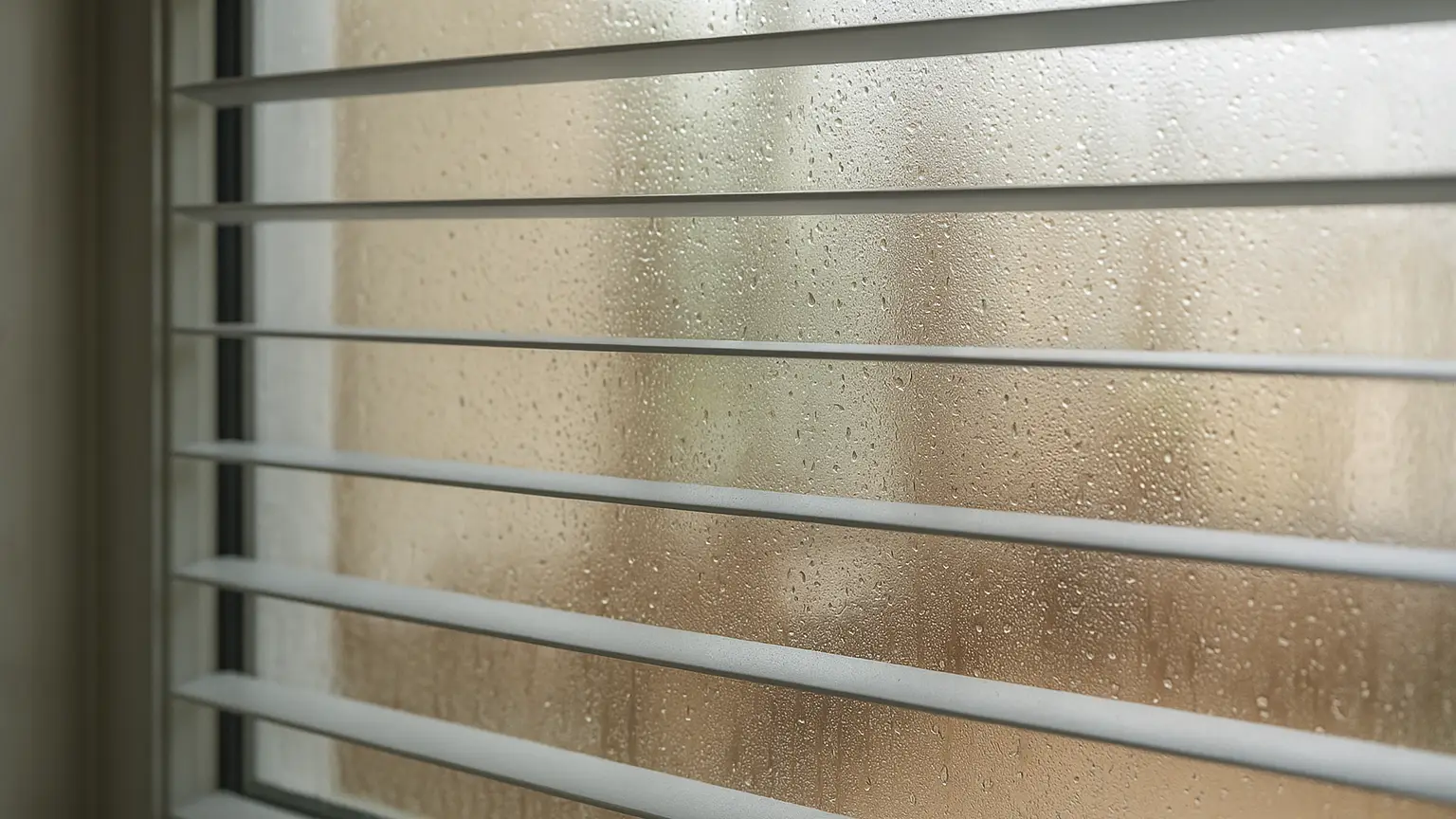
Glass is the coldest surface in most rooms on a winter night. Open louvers let warm room air wash over it and keep it a few degrees warmer. Close them, and that warm air is cut off. The glass cools, and so does the thin layer of air trapped against it.
Cool air can't hold as much water as warm air. When the air touching the glass drops to its dew point, the extra water turns into tiny droplets, just like on a cold drink sitting on a patio table. That's the fog you find when you open the louvers at 7 a.m. In most cases, nothing is wrong with the glass. The shutter just blocked airflow a little too well.
Where the Water Comes From in a Desert Home
Mesa is dry, so many people are surprised to see fog at all. But the moisture usually starts inside the house:
- Evaporative coolers. A swamp cooler adds water to the air on purpose. Run it into fall, and indoor air can stay far more humid than the air outside.
- Monsoon season. Late summer storms push humidity way up, and some of it sneaks indoors.
- Showers and cooking. Bathroom and kitchen windows fog first for a reason.
- Plants, fish tanks, and full houses. Houseplants release water all day, and a holiday dinner with lots of guests can fog every window by dessert.
Any of these can push the glass behind closed louvers past its dew point, even in a dry climate, which is why local Arizona window treatment companies often get questions about morning fog.
The One Clue: Which Side of the Glass Is Wet?
Here's the test that settles it. Fog on a surface you can touch is almost always harmless. Fog trapped between the two panes means the window's seal has failed.
Try the Fingertip Test
- Open the louvers all the way.
- Run a clean finger or dry cloth across the foggy spot.
- If a clear streak appears, the moisture is on the room side.
- If nothing changes, check the outside face. Dew outside is common on cold, clear mornings and is harmless.
- If the fog stays no matter which side you wipe, it's sealed inside the window.
What Each Answer Means
Surface fog that wipes off and fades once the room warms up is normal condensation. Fog between the panes is a different story. Dual pane windows are built with a sealed gap, often filled with argon gas, that slows heat flow. Once the seal breaks, that gas leaks out, damp air creeps in, and the window loses much of its insulating power.
Other Signs Your Seal Has Given Up
Seal failure doesn't always look like heavy fog. Watch for these clues, especially on south and west windows that take the most sun:
- A milky haze that never fully clears, even on dry days
- White streaks or spots like dried water marks inside the glass
- Fog that shows up in the afternoon when sun heats the window
- A faint rainbow sheen between the panes
- A nearby room that feels harder to keep cool
Arizona heat is tough on seals. The glass expands in the afternoon and shrinks at night, over and over, for years. As earlier parts of this series showed, heat building up behind closed coverings can add to that strain.
Keeping Harmless Fog in Check
If your fog wipes away, small changes usually fix it. Tilt the louvers open a crack at night so some room air reaches the glass. Run bathroom fans for 20 minutes after showers. Give the evaporative cooler a rest on cool fall days. Wipe the sills in the morning so water doesn't sit on wood or paint.
Slat size matters too. Wide plantation louvers block more airflow than thin slats, which is why some homeowners choose compact mini blinds for bathrooms and small kitchen windows where steam is common. If you're picking coverings for a damp room, the Arizona window treatment companies that know local conditions can steer you toward moisture-friendly materials like faux wood or vinyl.
When to Call a Glass Pro
Fog between the panes won't clear up on its own, and no wiping, drying, or venting can reach it. The good news is that you often don't need a whole new window. In many cases, a technician can swap just the sealed glass unit and keep your existing frame, which usually costs less and takes less time.
It's also a smart moment to think about upgrades. If the failed window faces the afternoon sun, a few glazing upgrades for west sun can cut heat gain while bringing back a clear view.
Shutters and blinds do a lot, but they can't stop a broken seal from letting moisture in. That gap between what coverings handle and what only the glass can handle leads into the final part, which shows how coverings and glass split the work in a Mesa home.
Let the Glass Tell You the Story
Fog behind closed louvers is mostly simple math: cold glass, trapped air, and a little indoor humidity add up to droplets by morning. A cracked louver, a running fan, and a quick wipe usually keep it under control. The one clue that matters is location. If the fog wipes off, it's harmless. If it sits between the panes, stays hazy, or leaves white streaks you can't reach, the seal has failed, and a glass pro with a new sealed unit can often bring back a clear, efficient window.