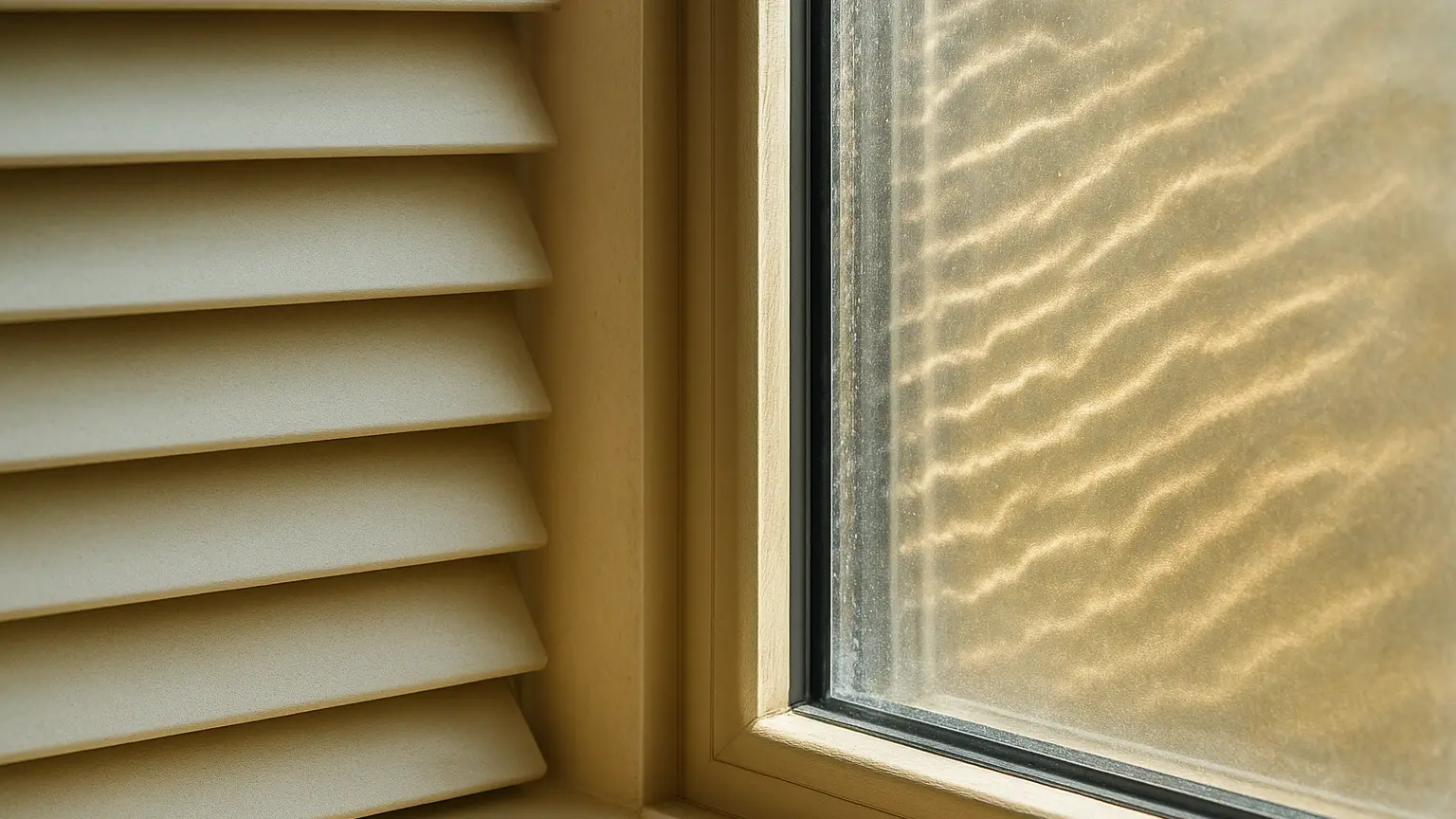
Every window with blinds or shutters has a second, hidden space. It is the few inches of air between the closed slats and the glass. Most Mesa homeowners never give it a thought. Yet that thin pocket decides a lot about how warm a room feels, how hard the AC runs, and how long your glass lasts.
Key takeaways
- Why the few inches of air behind closed blinds can get much hotter than the room around them
- How uneven heat across a pane can stress certain types of window glass
- How to tell wipeable surface condensation from fog trapped between the panes
- Which jobs belong to your blinds or shutters and which only your glass can handle
This series is for anyone who shuts the blinds against the Arizona sun and wonders what is going on behind them. It follows that gap through the year. Summer brings trapped heat. Cool mornings bring fog. And all year long, the blinds and the glass are each doing a different job.
We shaped the series with input from the window covering team at Rapid Blinds, whose hands-on work with blinds and shutters in Valley homes helped us look at the gap from the covering side as well as the glass side.
A Small Space With a Big Effect on Comfort
The series starts with the gap itself. When the sun hits your window, the air behind a closed blind heats up fast. A tight blind keeps that hot air pinned against the glass. A loose one lets it rise out the top and spill into the room. Either way, you feel it.
This matters because closed blinds feel like a shield. In truth, they move heat around more than they stop it. Once you see how air does or does not circulate in that pocket, a lot of odd hot spots near your windows start to make sense.
When Trapped Heat Turns Into Glass Stress
Next, the series looks at what all that heat does to the glass. Glass copes well when the whole pane warms evenly. Trouble starts when the center bakes in the sun while the edges, tucked inside the frame, stay cooler. Hot glass expands. Cool glass does not keep up. That pull between the two is where stress comes from.
What Raises the Risk
- Blind color: darker slats soak up more heat right next to the pane.
- Fit: coverings mounted tight to the glass leave little room for air to move.
- Glass type: some glass is more sensitive to uneven heat than others.
- Timing: the hottest months are when small issues show up first.
That stretch ends with simple questions to bring to your glass pro before summer, so you know if your windows need any changes.
Fog in the Gap: Harmless or a Warning
As the season turns, the same gap fills with moisture instead of heat. On a cool night, glass is the coldest surface in the room. Closed louvers keep warm room air from washing over it, so it gets even colder. Moisture in the trapped air then settles on the glass as fog.
The One Clue That Sorts It Out
Most of this fog is normal. The trick is knowing where it sits. If a fingertip wipes it away from the room side, it is surface condensation. If it sits between the panes and will not budge, the window seal has likely failed. That kind of fog will not clear up on its own.
Two Tools, Two Different Jobs
The series closes with the big picture. Blinds and shutters are great at some things, but they work on the room side of the window. Glass works at the outside, where the sun and weather hit first. So each one has its own lane:
- Blinds control light, glare, and privacy.
- Blinds can soften some heat once it is already inside.
- Quality glass blocks much of the sun's heat before it gets in.
- A sound seal keeps moisture out of the window itself.
Good blinds can hide a glass problem, but they cannot fix one. The best results come when both are in good shape and working together.
Finding Your Way Through the Gap
If you want the full story, start with part 1 and read in order. Each part builds on the one before it, moving from heat to stress to moisture and then to how the pieces fit together.
If you already have a question, jump straight to the part that fits. Hot rooms point to the first two parts. Foggy glass points to the third. Weighing new blinds against new windows points to the last.
Know What Your Blinds Are Hiding
Common questions
Can closed blinds really make my windows hotter?
Yes. Closed blinds trap sun-heated air against the glass, and that gap often runs much hotter than the room. Fit, color, and airflow all change how much heat builds up.
Is it safe to keep my blinds shut all summer in Mesa?
For most windows it is fine, but some glass types are more sensitive to uneven heat. A glass pro can tell you if your windows need extra airflow or a different setup.
Why is there fog on my window when the shutters are closed?
Closed louvers keep warm room air off the glass, so it gets colder and moisture condenses. If you can wipe it off from the room side, it is usually harmless.
How do I know if my window seal has failed?
If the fog sits between the panes and will not wipe away from either side, the seal has likely failed and the glass unit may need replacing.