Part 4 of the 4-part series What Happens Behind Your Window Blinds: The Complete Series.
Part 3 showed how fog behind closed louvers can be harmless or can point to a failed seal. That raises a bigger question. If blinds can hide a glass problem, can good blinds also make up for one? They can't, and the reason comes down to where each one does its work.
This series was shaped with insights from Rapid Blinds, whose hands-on knowledge of how window coverings behave in real homes helped explain what goes on in that small gap between the slats and the glass. Their view, along with what we see on glass jobs across Mesa, points to one plain truth: blinds and glass each do a job the other can't.
Blinds Work Inside the Room. Glass Works at the Wall.
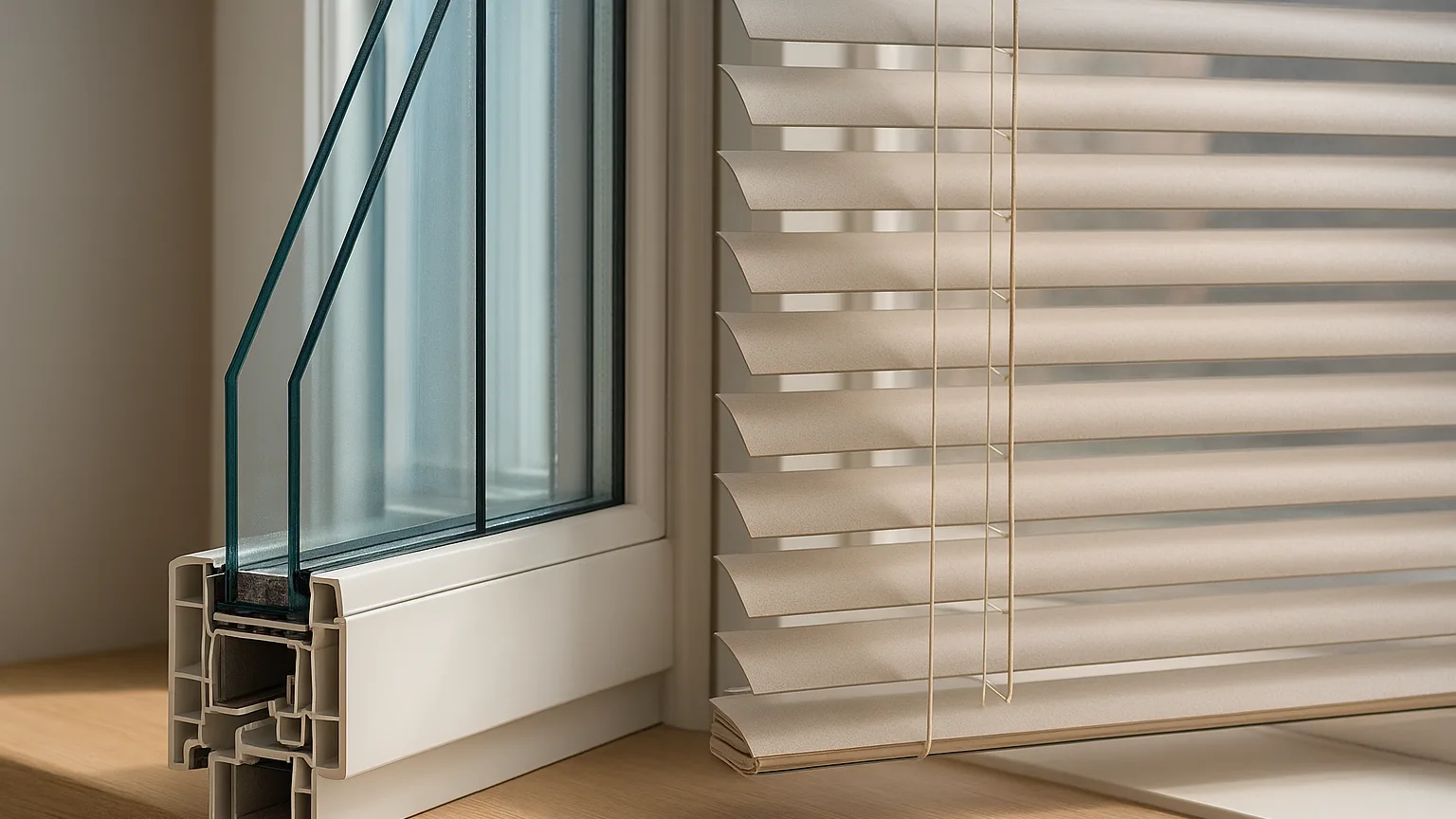
Think of your window as two layers with an air pocket between them. The blind sits on the room side. The glass sits in the wall, facing the weather. By the time sunlight reaches your blinds, it has already come through the glass. Heat is already inside your house.
A closed blind can slow how much of that heat reaches your couch. It can't send the heat back outside. Glass is the only layer that can turn heat away before it gets in. That is the core job your blinds can't do, no matter how well they are built.
Who Handles What
Here is how the work splits between the two.
Blocking Heat
- Glass: Low-E coatings and dual panes reflect and slow heat before it enters.
- Blinds: They catch some of the heat that gets through and keep direct sun off people and floors.
Controlling Light
- Glass: It can cut UV rays and some glare, but it can't change its light level by the hour.
- Blinds: Tilting slats lets you dial light up or down, aim it at the ceiling, or block it for privacy.
Keeping Out Moisture
- Glass: A sound seal keeps humid air and monsoon rain out of the space between panes.
- Blinds: They do nothing here. Closed slats can even trap damp air against cold glass.
Light control belongs mostly to the blinds. Heat is shared, but glass does the heavy lifting. Moisture belongs to the glass alone.
Why One Can't Fill In for the Other
People often buy new blinds hoping to fix a hot room. If the glass is old, single pane, or has a failed seal, the blinds end up fighting a battle they can't win. The room stays warm, and the air pocket behind the slats gets hotter, which is the stress Part 2 talked about.
It works the other way too. Great glass can't give you privacy at night or soften harsh light on a TV screen. Picking among the four glazing upgrades that outsmart the west sun will lower your heat, but you will still want something you can open and close.
One Mesa Afternoon, Two Different Homes
Picture two houses on the same street at 4 p.m. in July. Both have west windows. Both have nice wood shutters.
In the first house, the glass is the original from the 1990s. The shutters are closed tight. The slats feel warm to the touch, the air behind them is hot, and the AC runs nonstop. The homeowner thinks the shutters aren't working.
In the second house, the glass was replaced with dual-pane Low-E units. The shutters are tilted half open. Soft light fills the room, the slats stay cool, and the AC cycles off now and then. Same shutters, very different result. The glass made the difference, and the shutters finished the job.
Small Choices That Help Them Work Together
- Fix seal failures and cracks first, then shop for coverings.
- Leave a little space between the blinds and the glass so air can move.
- On very hot days, tilt slats up instead of shutting them flat against hot glass.
- Open blinds for a while each morning to let trapped moisture clear.
- Ask your glass pro if your coating or tint has any limits with dark coverings.
Color matters more than many people think. Lighter slats bounce more sun back toward the glass, while darker ones soak it up, so choosing the right blind color is about comfort as well as style. Rapid Blinds' guidance on fit and material lines up with this: the best covering is one picked with the window behind it in mind.
If you are comparing local options, a list of Arizona window treatment companies can help you find people who understand desert heat and will ask about your glass before they measure.
What the Four Parts Add Up To
Looking back across the series, each part covered one piece of that small gap:
- Part 1 showed how heat builds in the air pocket behind blinds and why airflow matters.
- Part 2 looked at how a common summer blind habit can add stress to certain glass.
- Part 3 explained how to read fog behind closed louvers and spot a failed seal.
- This part ties them together: the gap works best when both layers do their own job.
Two Layers, One Comfortable Room
Blinds are great at what they do. They shape light, give you privacy, and take the edge off the sun once it is inside. But the work of turning heat away and keeping moisture out happens at the glass, out in the wall where the weather hits. No slat, fabric, or finish can reach that far.
So treat your windows as a team. Start with glass that is sealed, sound, and suited to Mesa's sun, then add coverings that let air breathe in that small gap. When each layer does its own part, your rooms stay cooler, your glass lasts longer, and those few inches behind your blinds stop being a problem you never knew you had.