Part 1 of the 4-part series What Happens Behind Your Window Blinds: The Complete Series.
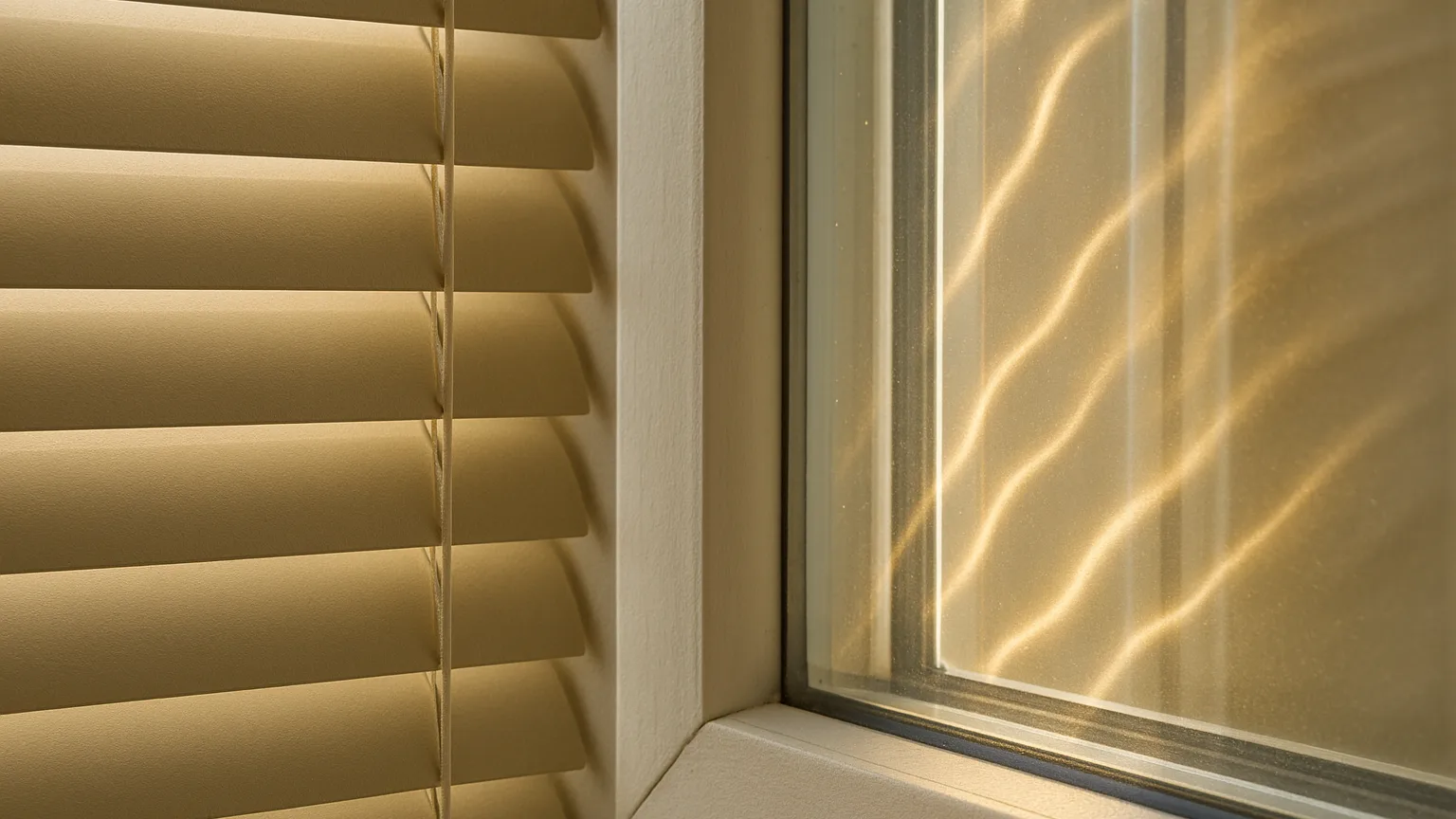
Close your blinds on a July afternoon in Mesa and you create a small, hidden room. It is only a few inches deep, but it runs the full height and width of your window. Most people never think about it. Still, that thin pocket of air does a lot to decide how warm your room feels, how hard your AC works, and how your glass holds up over time.
This four-part series was shaped with insights from the window covering team at Rapid Blinds, whose hands-on work with blinds and shutters in Arizona homes helped us look at the gap from both sides: the covering and the glass. We start with the basics: what is in that space, how heat collects there, and whether the air moves at all.
What Is Really Sitting Behind the Slats
Picture a sandwich. Your window glass is on one side, your closed blind is on the other, and a layer of air two to four inches thick sits in the middle. That air does not stay still, and it does not stay cool.
Closing blinds does not stop sunlight from coming through the glass. The light just hits the blind instead of your floor or couch. Whatever the blind does with that energy happens right inside that little pocket.
How Heat Piles Up in a Space Smaller Than Your Hand
Here is the chain of events on a sunny west-facing window:
- Sunlight passes through the glass. Even good glass lets some heat in.
- The slats soak it up. Darker slats absorb more. Light or white backs bounce more of it back out.
- The slats warm the air around them. The pocket can get much hotter than the rest of the room.
- The glass warms from both sides. The sun heats it from outside, and the trapped air heats it from inside.
How much heat enters in the first place depends a lot on the glass itself. Low-E coatings and tinted panes cut the load before it ever reaches the blind, which is why four glazing upgrades that outsmart the afternoon sun can change what happens in the gap.
Does Air Move Back There? Meet the Hidden Chimney
Yes, and it moves in a loop. As the pocket warms, hot air rises and slips out through the gap at the top of the blind. Cooler room air gets pulled in at the bottom to replace it, heats up, rises, and spills out the top again.
It works like a small chimney, sending a slow, steady stream of warm air into your room near the ceiling. Your blind is still blocking glare, but it is also quietly feeding heat into the house.
Where the Gaps Usually Are
- Along the top, near the headrail
- Down both sides, where slats stop short of the frame
- At the bottom, under the last slat
- Between the slats, if they are tilted even a little open
Rooms with extra heat sources make this loop stronger. In kitchens, stove heat and steam add to the sun, which is part of why choosing blinds for a kitchen takes more thought than people expect.
Inside Mount vs. Outside Mount
An inside mount sits within the window frame, so the pocket is smaller and the side gaps are usually tight. An outside mount hangs on the wall over the frame. It can cover more, but it often leaves a deeper space and a wider opening at the top. Neither is wrong. They just shape the airflow in different ways.
Why You Feel It From Across the Room
Ever sit near a closed blind and still feel warm? That is not in your head. Hot slats give off heat the same way a stovetop does after you turn it off, so you feel it on your skin even when the thermostat reads fine. Add the warm air spilling out the top, and the room feels stuffy up high and uneven overall. Your AC then runs longer, chasing a comfort problem it cannot quite see.
A Five-Minute Test You Can Try This Afternoon
You do not need tools. Wait until the sun is on the window, then:
- Lay your palm flat on the back of a slat. Is it warm or hot?
- Hold your hand near the top gap. Do you feel warm air drifting out?
- Touch the glass behind the blind, then a nearby window that is uncovered.
- Try tilting the slats up, then down, and notice which feels cooler near the window.
Hot slats and a very warm pane are signs that the pocket is working hard. Many local pros, including Arizona window treatment companies that deal with desert heat every day, suggest checking this during the hottest part of the day.
When Winter Flips the Script
On cool Mesa nights, the pocket runs the other way. The glass gets cold, chills the air behind the blind, and that heavier air sinks and spills out the bottom. That is the draft you feel near the floor. Cold glass and warm room air can also leave moisture on the pane, which ties into what we cover later on fog behind closed louvers.
The bigger summer question is whether all that trapped heat is hard on the glass itself. Certain types of glass react to uneven heat more than others, and that is exactly what we look at next in the summer blind habit, along with questions to ask before peak heat arrives.
Small Gap, Big Say in How Your Home Feels
The space behind your blinds is only a few inches deep, but it is busy. Slat color, mount style, gaps, and the glass itself all shape what happens back there, from summer heat to winter drafts. Once you know the pocket exists, you start to notice the warm slats, the stuffy air near the ceiling, and the hot glass on west windows. That awareness is the first step toward a cooler, more even home.