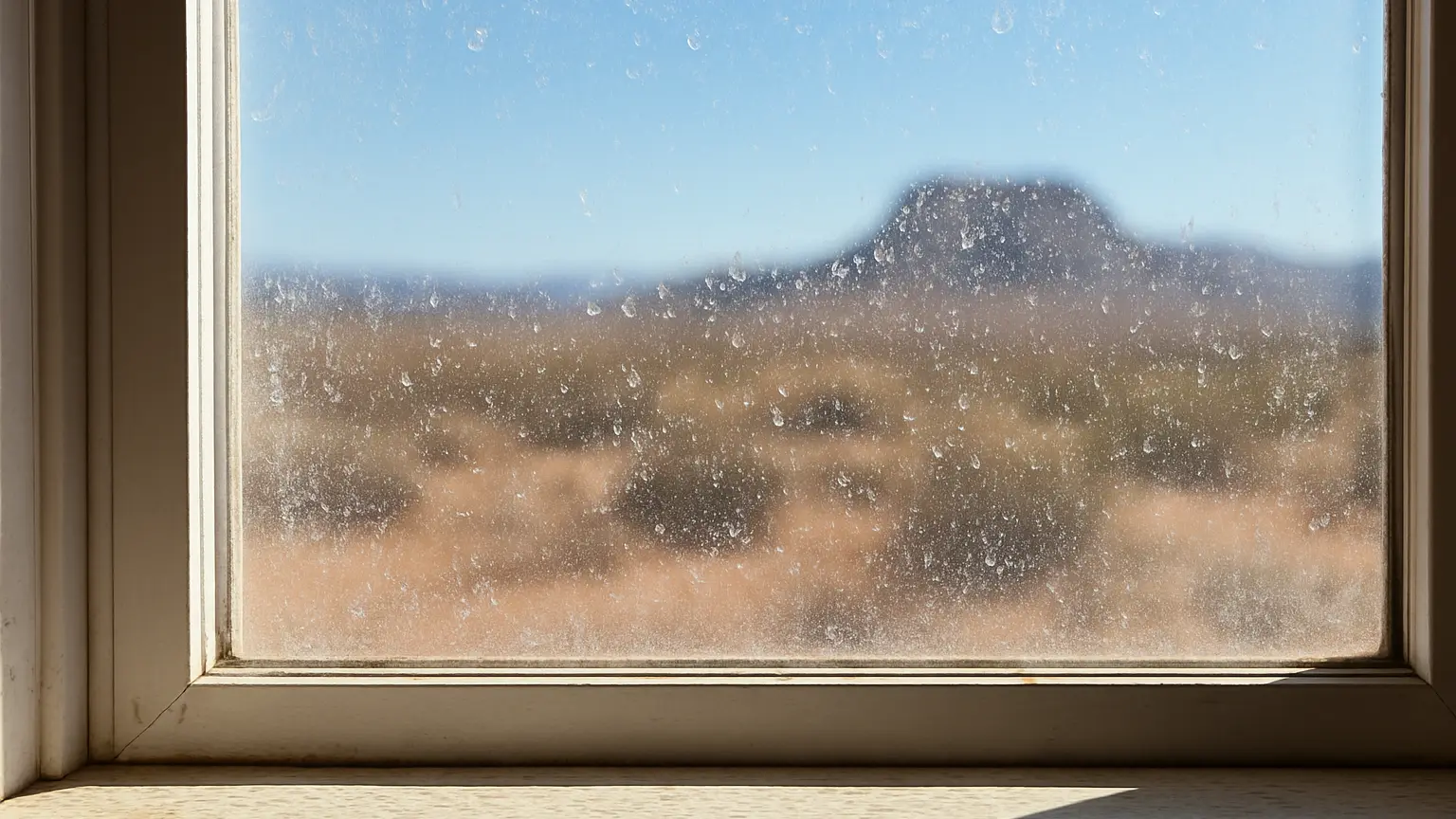
Mesa is hard on glass. The water is full of minerals. The dust is gritty. Monsoon storms leave a film behind, and summer sun bakes all of it onto your windows. Then one day you wipe a pane twice and it still looks cloudy. Is it dirt? Is the window failing? Should you scrub harder or call someone?
You'll come away knowing
- How to tell surface grime and hard-water spots from failed seals, trapped fog, and etched glass
- Why vinegar, newspaper, and dry wiping can scratch desert glass, and what to use instead
- How to clean around low-E coatings without wearing them down
- Which window problems mean cleaning is no longer enough
- When to book a replacement so it is done before Mesa's hottest months
This three-part series is for Mesa homeowners who want a straight answer to that question. It walks you through one clear path. First you figure out what you are looking at. Then you clean what can be cleaned the right way. And when cleaning is no longer enough, you plan a replacement before the heat makes the problem costly.
Field insight from Arizona Preferred Window Cleaning, a Mesa crew that works on desert glass every week, helped shape the advice across all three parts.
Step One: Know What Kind of Haze You Have
Cloudy glass is not one problem. It is at least three. Some haze sits on the surface, like dust and hard-water spots from sprinklers. Some sits between the panes, where a broken seal lets moist air in. And some has become part of the glass itself, after minerals etch into it over time.
Each one acts differently. Surface haze comes off with the right method. Fog between panes will never wipe away, no matter what you use. Etching can sometimes be softened but rarely erased. Knowing which one you have saves you hours of scrubbing and keeps you from damaging good glass while chasing a problem you can't reach.
Step Two: Clean Desert Glass Without Hurting It
Once you know the glass can be cleaned, the next risk is cleaning it badly. Much of the classic advice comes from places with soft water and soft dust. Mesa has neither.
Why the Old Tricks Backfire Here
East Valley dust holds fine quartz sand, and quartz is harder than window glass. Wipe it around dry, or rub it with newspaper, and you drag tiny bits of rock across the pane. Over time that leaves fine scratches that catch the light and look like haze. Strong home mixes can also be rough on low-E coatings, the thin layer that helps block heat.
What Works Instead
- Rinse first so loose grit floats off before anything touches the glass.
- Use gentle tools like a soft wash pad and a clean squeegee.
- Work in the shade or early in the day so water doesn't dry into new spots.
- Treat hard water with care instead of scraping or scouring.
These habits keep healthy windows clear for years and help you see whether any cloudiness left behind is a sign of something deeper.
Step Three: Replace Before the Heat Arrives
Sometimes a clean window still looks dirty. That is often the moment a pane has moved past what a squeegee can do. Foggy glass, drafty frames, and windows that feel hot to the touch all point the same way.
Waiting has a price in Mesa. When temperatures climb past 110°F, a failing window lets heat pour in. Your air conditioner runs longer, rooms near the glass stay warm, and cooling bills rise. Installers also get busy as summer gets close. Planning in the cooler months gives you more choice in products and timing, and the work is done before you need it most.
Finding Your Way Through Clear View
If you are not sure what is wrong with your windows, start with the first part and read in order. Each part builds on the one before it, moving from spotting the problem to cleaning it to knowing when to replace.
If you already know where you stand, jump straight to the part below that fits. Cleaning questions live in the second part, and replacement planning lives in the third. Either way, you will come away knowing exactly what your glass needs.