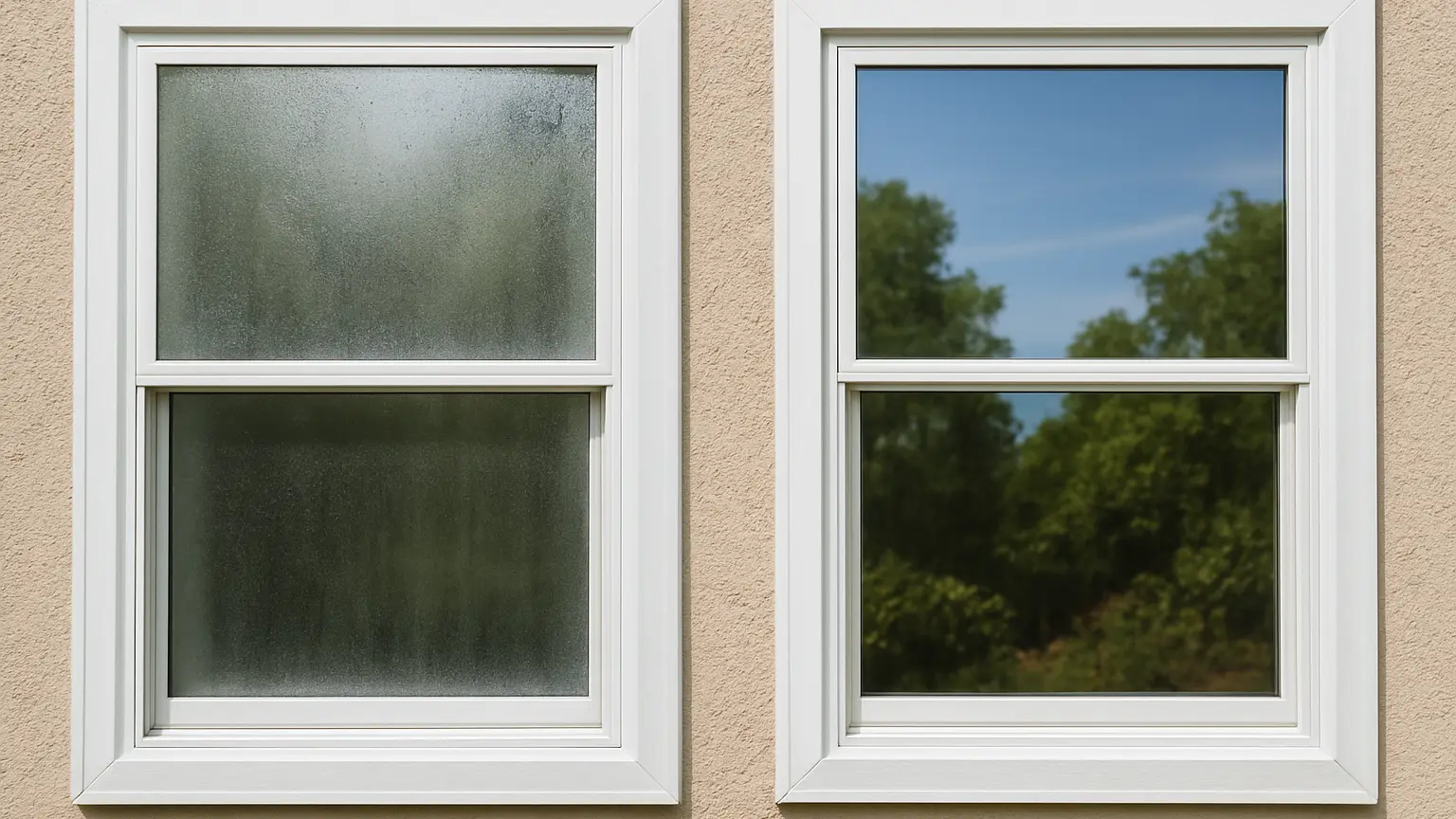
Good cleaning habits can keep healthy glass looking great for years. If you have switched to gentle tools and safe methods for removing desert dust safely and your windows still look tired, the glass may be telling you something cleaning can't fix.
A common mistake is to reach for stronger cleaners or scrub harder at glass that has already failed, losing a whole season of cooling to a pane no product can revive. Understanding how window care and replacement connect helps you spot which job your windows actually need before the summer bills arrive.
This guide draws on field insights from Arizona Preferred Window Cleaning, whose crews see Mesa windows up close every week and know when a pane has moved past the help a squeegee can give. Their experience shaped much of the advice below.
When a Clean Window Still Looks Dirty
Some problems sit on the glass. Others sit inside it or around it. Once you have learned to tell haze from grime, these signs point toward replacement, not another wash:
- Fog between the panes. Moisture trapped inside a dual-pane unit means the seal has failed. No cleaner can reach it.
- Etched spots that never lift. Years of hard water can pit the surface until the glass itself is damaged.
- Warm glass on summer afternoons. If you can feel heat when you hold your hand near the pane, the window is letting the sun in.
- Drafts and dust lines. Thin streaks of dust along the frame show where air sneaks through.
- Sticky or stuck sashes. Warped frames make windows hard to open, lock, or seal.
- Cracked or brittle seals. Desert sun bakes rubber and caulk until they shrink and split.
One of these alone may be a repair. Two or three together usually mean the window is near the end of its life.
The Real Price of "Next Year"
Putting off replacement feels like saving money. In Mesa, it often works the other way.
Your AC Pays the Bill
A failed seal lets the insulating gas escape from between the panes. What is left works more like a single sheet of glass. On a 112-degree day, that window acts like a small heater pointed at your living room. Your air conditioner runs longer to keep up, and you feel it on every bill from May through September.
Comfort Takes a Hit
Bad windows create hot zones. The couch by the west window becomes too warm to sit on. The bedroom facing the afternoon sun never cools down at night. Many people try to solve this with heavier shades, but there is a job your window blinds can't do, and stopping heat that already passed through the glass is part of it.
Small Problems Grow
Moisture inside a pane can leave stains and mineral film that build over time. Gaps around the frame let in dust, and during monsoon season, sometimes water. The longer you wait, the more the problem spreads beyond the glass.
"When a homeowner asks us to clean fog off the inside of a pane, that is our cue to have an honest talk," says Daniel Reyes, senior field technician at AZ Preferred Window Cleaning. "We can make the outside spotless, but a failed seal is a replacement issue, and it is better to hear that in the fall than in July."
A Countdown Calendar for a Cooler Summer
The best time to replace windows in Mesa is the stretch when most people aren't thinking about it. Here is a simple timeline that lands new windows in place before the heat returns.
October and November: Walk and Note
Go room by room on a sunny afternoon. Write down which windows feel warm, fog up, stick, or leak light around the edges. Start with west and south walls, since they take the hardest sun.
December and January: Get Quotes
Installers are less busy during the cool months. That often means more time for a careful measurement and a faster start date. Ask for at least two written quotes.
February: Choose Your Glass
This is when you decide on frame material, low-E coatings, and tint. Our guide to four glazing upgrades that outsmart the afternoon sun can help you match the glass to each side of the house.
March and April: Install
Mild weather makes install day easier. Openings sit exposed for a few hours, and in spring that means a breeze instead of a blast of heat. Sealants also cure well in moderate temperatures.
Questions Worth Asking Before You Sign
A good installer will answer these without hesitation:
- Will you replace the whole frame or insert new units into the old one?
- Which low-E coating do you recommend for my west-facing rooms?
- How long does the seal warranty last, and what does it cover?
- Who handles cleanup and disposal of the old windows?
- How should I clean the new glass so I don't harm the coating?
That last question matters more than people think. The crews at Arizona Preferred Window Cleaning often point out that new coated glass lasts longest when it gets soft tools, mild soap, and filtered water from day one. Safe cleaning protects the investment you just made.
From Hazy Glass to a House That Stays Cool
Every window tells a story if you know how to read it. Surface dust and hard-water spots respond to the right cleaning methods. Fog between panes, deep etching, warm glass, and drafty frames mean the window can no longer do its job. In Mesa, ignoring those signs costs you in cooling bills, lost comfort, and damage that keeps spreading.
The fix is simple timing. Spot the problems in fall, gather quotes in winter, pick smart glass in February, and install in spring. Then care for your new windows with gentle, coating-safe cleaning so they stay clear for years. Do that, and the next heat wave becomes something you watch through clean glass instead of something you pay for all summer.