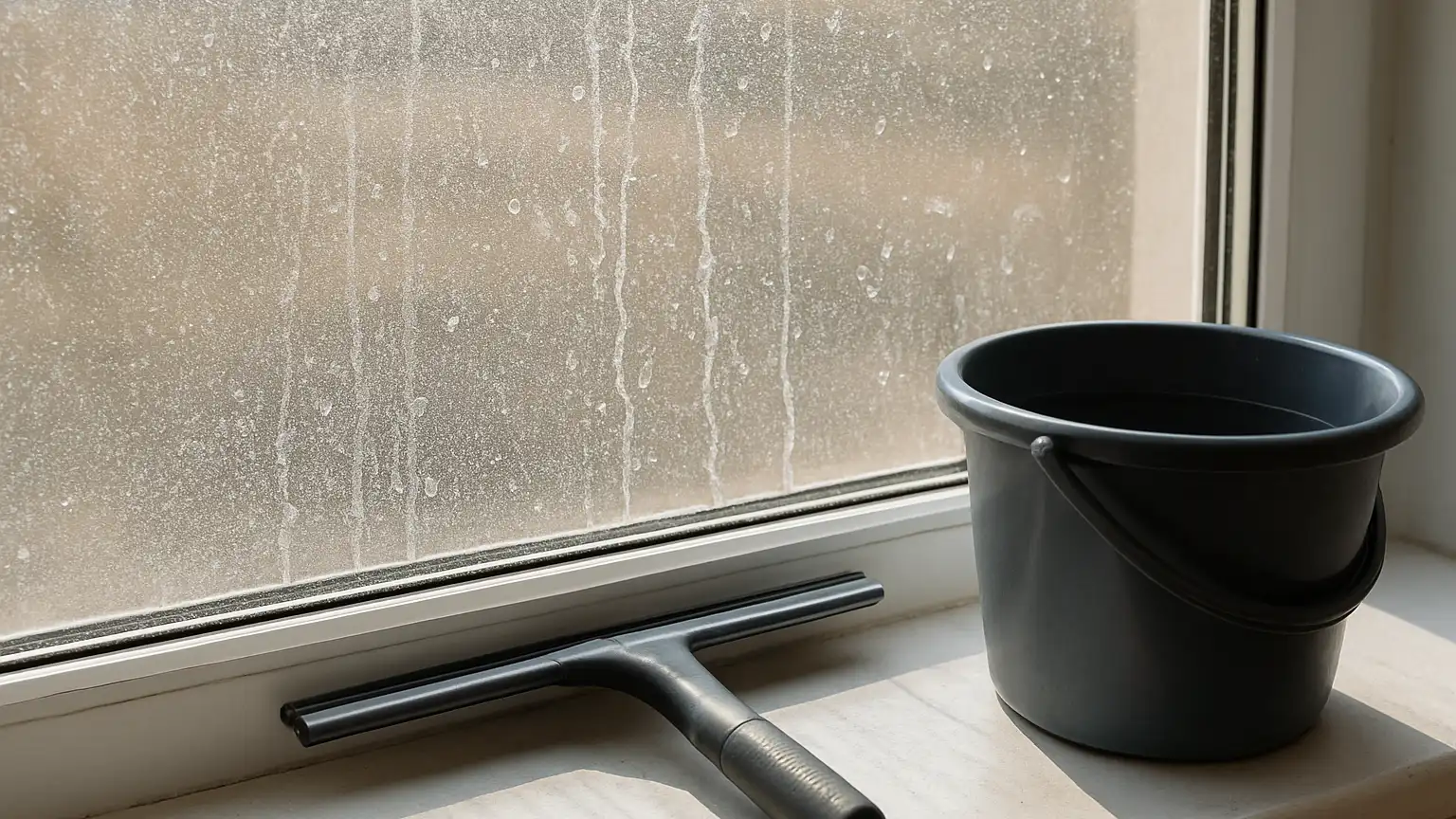
Some window haze is just dirt, and some is a failed seal or etched glass that no cleaner will fix. If you've already learned to spot haze that won't scrub off, the next question is simple: how do you clean the glass that can still be cleaned without making it worse?
A common mistake is treating every pane the same, pouring hours and harsh cleaners into glass that's already past saving while the healthy windows pick up scratches along the way. Sorting out which panes need care or replacement keeps your effort on the glass that will actually reward it.
The methods here were shaped with input from Arizona Preferred Window Cleaning, a Mesa crew that sees what desert grit, monsoon storms, and sprinkler spray do to glass every week.
Your Glass Is Softer Than the Dust on It
This one fact changes everything. Desert dust in the East Valley holds a lot of fine quartz sand, and quartz is harder than window glass. Wipe a dusty pane with a dry cloth and you drag tiny bits of rock across a softer surface.
One wipe won't ruin a window. Years of dry wiping will, leaving faint swirls that catch the low winter sun and look like permanent fog. "Most old cleaning tricks were made up in wetter places with softer dirt," says Marcus Delgado, field operations lead at Squeegeezy. "They were never built for Mesa."
Four Tricks That Backfire in the Desert
Vinegar Sprays
Vinegar is an acid. Over time it can wear down rubber gaskets and window seals, and drips can dull stone or tile sills. It's also too weak for the thick calcium spots our hard water leaves behind, so people scrub harder to make up for it and grind dust into the glass.
Old Newspaper
Today's newsprint can leave gray smudges on white frames, and it has no give. It traps grit against the pane instead of lifting it away.
Razor Blades on Dry Glass
Held flat on wet, lubricated glass, a blade can be safe. Used dry, it scratches, and it can chip tempered glass, which is common in patio doors and big windows near the floor.
Magic Erasers and Scouring Pads
These are fine sandpaper in disguise. They can scuff glass and strip the thin low-E coating some windows carry on the room side. That coating helps keep heat out. It's one reason homeowners pick upgrades like the four glazing upgrades that outsmart our west sun, and you don't want to scrub it away.
The Safer Routine, Step by Step
This works on almost any home window in Mesa:
- Rinse first. Hose off outside glass with gentle water to float the sand away before anything touches it.
- Use mild soap. A few drops of plain dish soap in a bucket of water is enough. Skip ammonia, which can harm tint films and some coatings.
- Wash with a soft mop or microfiber. Keep it wet, and rinse the cloth often so grit doesn't build up.
- Squeegee from top to bottom. Wipe the blade after each pass with a damp towel.
- Dry the edges. A lint-free cloth along the frame stops drips from leaving new spots.
- Work in shade. Glass in direct sun dries too fast and streaks. Early morning is best.
Inside, dust tends to pile up in the few inches behind your blinds. Vacuum the sill and tracks with a brush tool before you wipe the glass, or that dust ends up on your cloth.
Monsoon Film and Sprinkler Spots
After a summer storm, windows often look worse than before it rained. Haboob dust mixes with rain and dries into a muddy film that looks stuck on but is mostly loose. Don't attack it with a dry towel the next day. Let soapy water sit for a minute or two, then rinse and squeegee. Patience does the work your elbow would otherwise do, and it saves the glass.
Sprinklers cause a different problem. Mesa water is loaded with minerals, and when spray hits a window and the sun bakes it, white rings form. Light spots usually come off with a cleaner made for mineral deposits, used on wet glass and rinsed well. Heavy, years-old buildup may need a pro with the right tools and polish. The real fix is upstream: aim sprinkler heads away from the house. A few minutes with a screwdriver can save years of spotting.
When to Hand It Off
Second-story glass, large sliders, and heavy mineral stains are where a trained crew earns its fee. They carry purified water systems, soft brushes, and blades meant for each kind of glass.
"Most damage we see wasn't caused by dirt. It was caused by someone scrubbing dirt that should have been rinsed," says Marcus Delgado, field operations lead at Squeegeezy. "Water does more than pressure ever will."
When you shop for help, look at how a company explains its process. Browsing a few standout window cleaning websites shows which crews list their methods, pricing, and guarantees up front. The Arizona Preferred team also points out that a good cleaner will tell you when glass is beyond cleaning instead of charging to polish a failed pane.
That honest moment matters. If spots come back right away or fog sits between the panes, the window itself may be failing. That is when it pays to start planning a window replacement before the summer heat arrives.
Water First, Elbow Grease Last
Desert glass asks for a lighter touch than most cleaning advice gives it. Quartz-heavy dust is harder than the pane, so dry wiping, newspaper, scouring pads, and dry blades all leave scratches, while vinegar wears on seals and barely dents hard water. Rinsing, mild soap, microfiber, a squeegee, and shade will clean safely and protect low-E coatings for years.
Monsoon film and sprinkler spots follow the same rule: soak, rinse, and go gentle before going hard. Fix the sprinklers, clear the dust behind the blinds, and call a pro for the tough or high jobs. And when clean glass still looks tired, stays hot to the touch, or fogs from within, it's time to recognize the signs that replacement beats cleaning and act before the hottest months turn every pane into an energy drain.